Science is beginning to suspect that longevity does not depend solely on how much we age, but on how well the body is able to recover between one effort and the next.
By Ehab Soltan
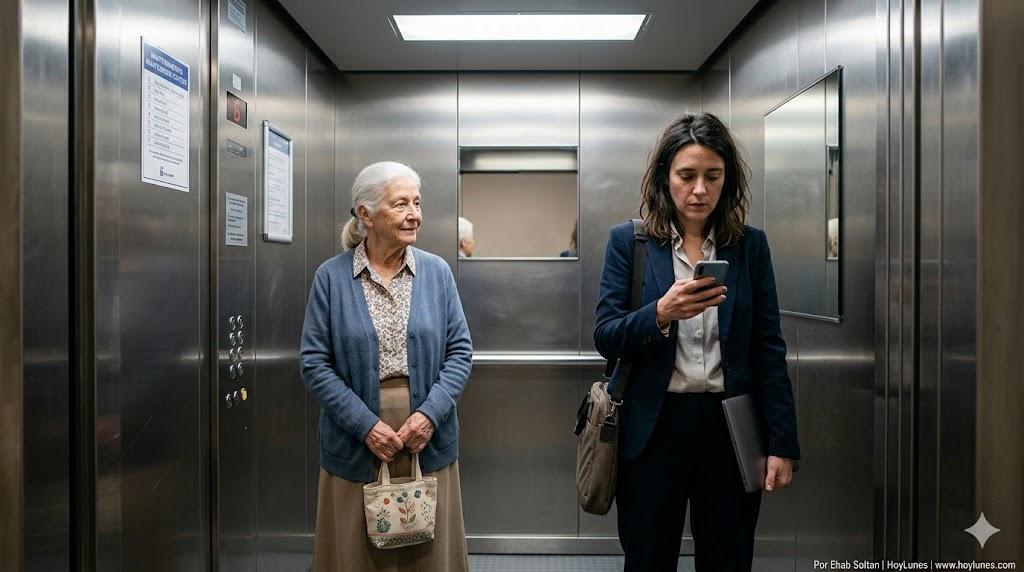
HoyLunes — I have always been struck by the difference between Carmen and Clara. They live in the same neighborhood, use the same elevator, and yet, one gets the impression that time passes through their bodies in a completely different way.
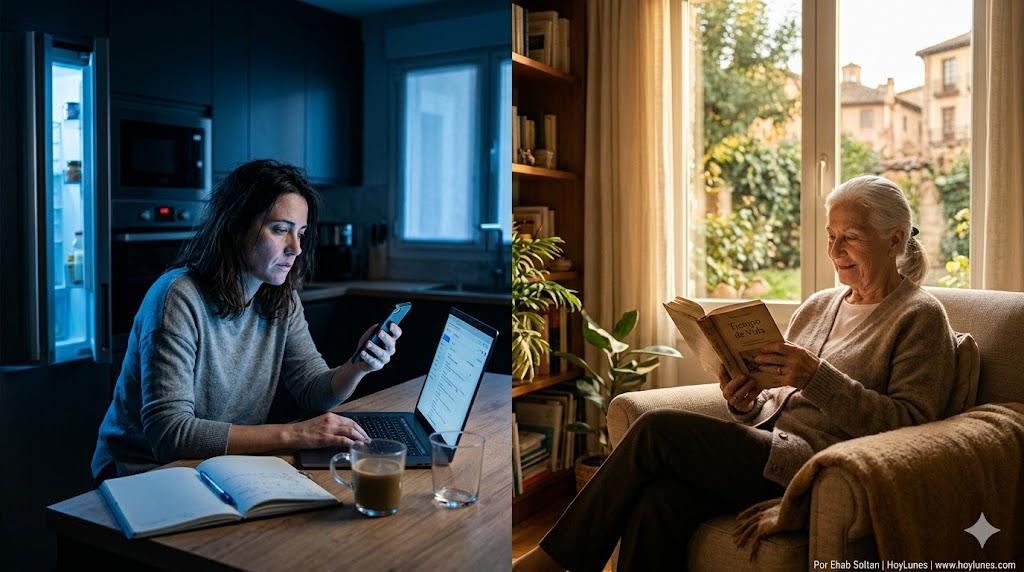
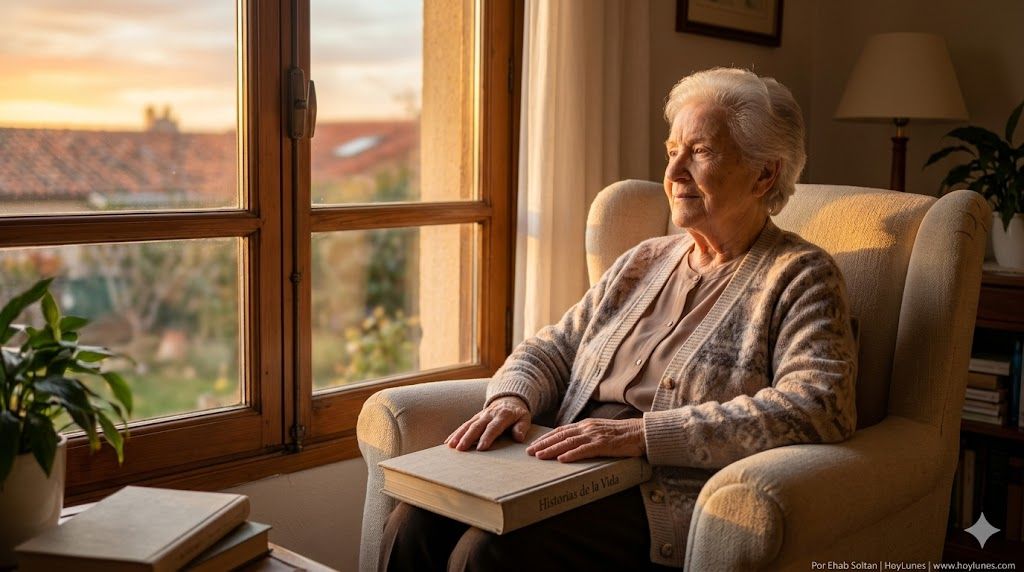
Carmen is over eighty years old. She climbs the stairs slowly, but without that heavy fatigue that today seems to have become normal in much younger people. She carries small bags because, she says, she no longer feels the need to carry everything at once. Some afternoons she sits by the window to read in silence, and there is something about her that is difficult to explain: she does not seem to spend her life recovering from it.
Clara, on the other hand, is thirty-eight and lives as if she were always five minutes late for something invisible.
She answers messages while waiting for the elevator, finishes meetings before starting others, and rarely allows herself a moment where she is not doing, thinking, or solving something. From the outside, anyone would say her life functions perfectly. And perhaps that is precisely the problem: it functions. But it never truly rests.
A few weeks ago, she told me something I am still thinking about:
“I feel like I sleep, but I don’t rest. I eat, but I don’t recover. It’s as if my body kept running even after I’ve stopped“.
She wasn’t sick. Her lab results were normal. She continued working, producing, and fulfilling everything we usually call a “stable” life. But there was a strange fatigue in her, a sensation of silent weariness that doesn’t appear all at once, but accumulates slowly until one day you discover that living is beginning to feel too much like surviving.
And the more I observed Carmen and Clara, the harder it became to ignore an uncomfortable question: perhaps true aging does not begin when the body loses strength, but when it loses the ability to recover.
Because the difference between feeling alive at eighty and exhausted at forty does not always seem to lie in genetics or luck. More and more research points toward another, much more mundane and less visible place: the body’s ability to truly exit a state of tension after effort.
Perhaps the great contemporary problem is not simply overwork, but having built a life where the body almost never receives the full signal that it can finally rest.
The noise the body no longer knows how to turn off
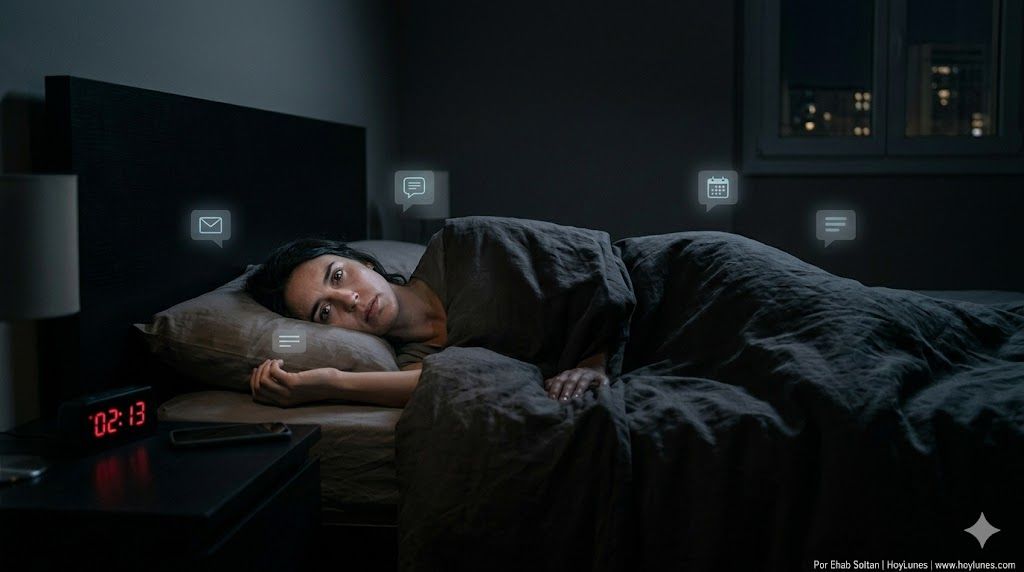
Over time, I understood that what was happening to Clara was not the normal tiredness of a difficult week. It was something more persistent. As if her system had forgotten how to return completely to a state of calm.
Even on Sundays, she seemed to stay partially switched on. She would finish one task and her mind was already on the next. She went to bed exhausted, but she didn’t give the impression of truly entering rest. It was like seeing a laptop with the lid closed that still continues running inside.
And perhaps therein lies one of the most dangerous confusions of our time: we believe that exhaustion appears because we do too much, when often it appears because our bodies never fully leave a state of alert.
Human biology knows how to handle stress. In fact, it needs certain challenges to grow stronger. What it does not tolerate well is permanent continuity. The body understands a specific threat; what it struggles to interpret is a diffuse sensation of tension that never quite disappears.
This is why research on allostasis, physiological recovery, and hormesis is beginning to describe something unsettlingly similar to modern life. The problem is not always the visible effort, but the silent accumulation of signals that the body interprets as a continuous warning.
When this happens for too long, recovery ceases to be deep. Sleep exists, but it does not restore in the same way. The mind stops for a few minutes, but the body continues working in the background. Even biological processes associated with cellular repair and cleanup seem to lose efficiency when the body remains trapped in constant vigilance.
And perhaps that is why so many relatively young people today feel a fatigue that is difficult to explain. It doesn’t quite fit their age. Sometimes it doesn’t even fit their medical tests.
It’s not just the work.
It’s the impossibility of truly disconnecting from it.
It’s not just sleeping fewer hours.
It’s sleeping without the body ever reaching a point of feeling completely safe.
The normalization of wear and tear
The most unsettling thing about
Clara was not her tiredness. It was the naturalness with which she lived with it.
She didn’t even see it as something alarming. She kept working, answering messages, arriving on time, and fulfilling everything we understand today as a functional life. From the outside, she simply seemed busy. Like almost everyone else.
And perhaps therein lies one of the most silent transformations of our era: we have begun to consider states of exhaustion normal that years ago would have been interpreted as clear signs that something needed rest.
Wear and tear no longer usually appears as a visible crisis. It appears as the everyday landscape:
In that mid-afternoon mental fog that we automatically correct with coffee.
In the need to look at a screen every time a moment of silence appears.
In reaching the weekend not to live it, but to try to recover enough to start all over again on Monday.
The curious thing is that many people react to this sensation by trying to optimize themselves even further. More habits, more control, more strategies to perform better. And without realizing it, they turn even self-care into another form of demand.
Clara started doing exactly that. She measured her sleep, downloaded wellness apps, followed healthy productivity advice, and changed routines every few weeks. But the more she tried to “manage herself,” the more she gave the impression of living inside a system that never completely switched off.
Carmen, on the other hand, never talks about wellness.
I have never heard her mention cortisol, inflammation, or high-performance routines. But there is something she does almost instinctively that today seems strangely rare: **when she finishes something, she truly finishes it.**
She eats without looking at her phone.
She rests without feeling guilty.
And when she sits by the window at the end of the afternoon, she doesn’t seem to be trying to recover quickly to get back to producing.
She simply rests.
For a long time, I thought that difference was a matter of personality. Now I am not so sure.

The science of what happens when the body does manage to recover
Over the months, I began to understand that the difference between Carmen and Clara was not solely in age, nor even in their visible habits. There was something harder to measure, but impossible to ignore: Carmen seemed to recover from life, while Clara simply learned to function within exhaustion.
And perhaps that is where one of the most important conversations about longevity—one we are having too late—begins.
For years, we spoke of aging as if the body were a battery that inevitably wears out over time. But more and more research on metabolism, inflammation, and cellular aging suggests something more uncomfortable: many people do not feel older solely because of the passing years, but because their recovery systems have been functioning incompletely for too long.
The human body is not designed only to endure. It is designed to alternate between effort and repair.
The problem appears when that alternation disappears.
Because when the body lives trapped in a constant dynamic of stimuli—screens until dawn, excess information, late meals, continuous decisions, a permanent sense of availability—recovery begins to fragment. We sleep, yes. But we don’t always restore. We rest for a few hours, but the system continues running in the background, as if it never fully receives the signal that it is finally safe to let go.
And that ends up affecting much more than just mood.
Some research already links this persistent difficulty in recovering with low-grade chronic inflammation, metabolic alterations, sustained fatigue, and an accelerated perception of aging even in relatively young people.
Perhaps that is why Carmen conveys something so different.
Not because she possesses a secret formula or because she lives obsessed with health. In fact, I suspect she has never thought about any of this. But her life still preserves real pauses. When the day ends, it truly ends. When she rests, she doesn’t seem to do so with guilt or anxiety about what comes next.
In Carmen’s world, the body still receives a clear signal of closure.
In Clara’s, that signal almost never arrives in full.
Redefining longevity
For a long time, I thought longevity consisted of enduring. Enduring more years, more pressure, more speed, more obligations. Perhaps that is why so many people talk about “aging well” as if the body were a machine designed to withstand wear and tear indefinitely.
But watching Carmen and Clara over these years, I began to understand that the right question was not how long a body can endure, but how long it can continue to recover.
Because that seems to be the silent difference between feeling alive and feeling exhausted. Not in the total absence of stress. Not in impossible perfection. But in the body’s ability to return to equilibrium after effort.
There are people who finish a difficult week and, after resting, truly return. Others, however, seem to pile each day on top of the previous one, as if the body never managed to fully empty the accumulated tiredness. And the unsettling thing is that this erosion usually begins long before a visible disease appears.
Perhaps that is why longevity should not be defined solely by the number of years lived, but by the quality of recovery that the body still retains within those years.
Modern science is slowly beginning to approach this idea. Research on chronic inflammation, nerve regulation, metabolism, and cellular aging points more and more to the same place: many of the problems we associate with “getting older” might be related not only to accumulated damage, but to a progressive loss of the capacity for repair.
And that changes the conversation completely.
Because then health stops looking like an obsessive race to add things—more supplements, more routines, more optimization—and starts looking more like an uncomfortable question:
What parts of our lives are preventing the body from doing what it already knows how to do biologically?
Perhaps that is why Carmen conveys something so difficult to explain. She doesn’t seem to be constantly fighting against herself. Her life still preserves real pauses, real silences, and real endings for each day.
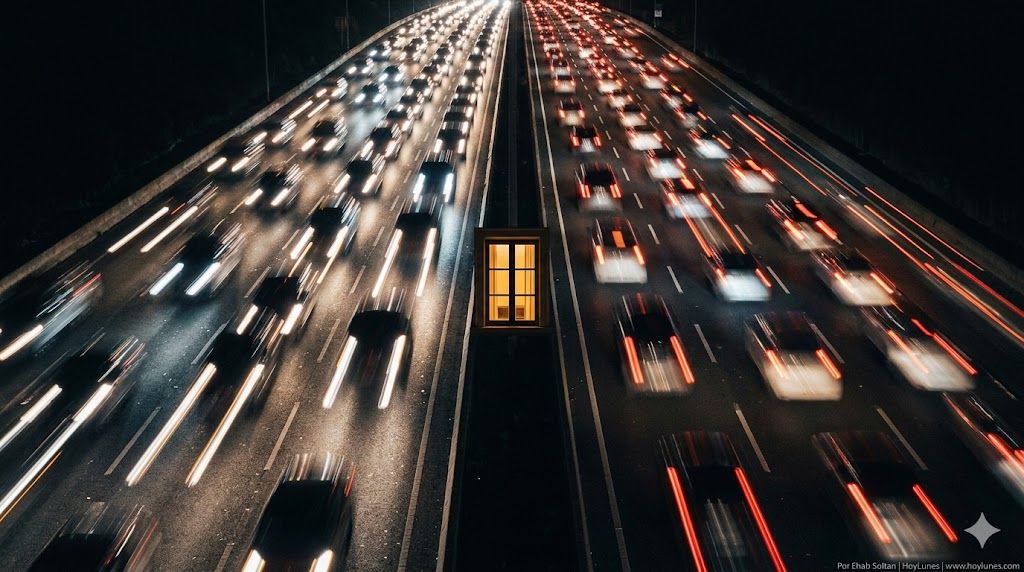
Clara, by contrast, lives within a permanent continuity. Like many people today. The body works, rests, responds, and sleeps without there being a clear boundary between recovery and performance.
And perhaps therein lies one of the most modern contradictions regarding longevity:
We have learned to prolong productivity, but we are forgetting how to allow for recovery.
Reflections for continuing to live, not just function
There are nights when I think about something apparently simple: At what exact moment of the day does my body understand that it can stop defending itself?
I don’t mean turning off the computer or leaving the phone on the table. I mean something else, harder to describe. That rare sensation of a real sense of ending. Like when we were children and the day truly ended—it didn’t just change rooms.
Sometimes I believe many of us rest physically, but remain “available” inside.
We change screens, not states.
And perhaps that is why so many people feel a strange tiredness even after sleeping or going away for a few days on vacation. The body stops, yes, but it doesn’t always manage to feel free from tension.
I also wonder about something that would have sounded absurd to me before: What if vitality didn’t depend solely on doing more of the right things, but on ceasing to constantly interrupt the recovery mechanisms that the body already possesses?
The human body knows how to repair, clean, compensate, and reorganize itself. It has been doing it for thousands of years. The problem may not be a biological incapacity, but the fact that we have built a life where there is almost never a clear end to the effort.
And the more I observe people like Carmen and Clara, the harder it is for me to ignore another uncomfortable idea:
Perhaps many things we today attribute simply to aging are not solely about age, but slow accumulations of incomplete recovery sustained over years.
What science is beginning to see through different eyes
Perhaps that is why some of the most interesting research on longevity no longer focuses solely on how to avoid disease, but on understanding what the body needs to truly enter recovery.
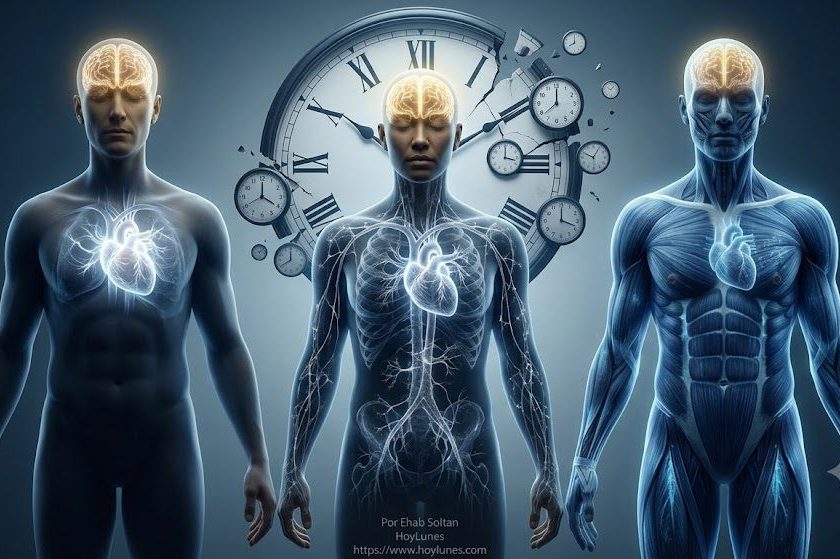
Science is beginning to study more closely processes that a few years ago barely appeared in daily conversations: autophagy and the cellular cleanup mechanisms that are activated when the body stops receiving constant stimuli; heart rate variability as a silent reflection of our true recovery capacity; the impact of nocturnal artificial light on melatonin and internal repair rhythms; or the relationship between sustained stress and that low-grade inflammation that many researchers already consider one of the most persistent hallmarks of modern aging.
And the further this research advances, the harder it seems to ignore an uncomfortable possibility:
Perhaps the human body was never designed to live permanently switched on.
#Longevity #MetabolicHealth #Aging #BiologicalRecovery #Wellness #ChronicFatigue #ModernStress #HolisticHealth #HoyLunes #EhabSoltan